EN
EN  FR
FR  DE
DE  RU
RU  ES
ES  AR
AR  JA
JA  KO
KO 
For B2B buyers, the quality of aluminum composite panels directly affects project safety, longevity, and visual appeal. Shingkwang analyzes common quality issues and provides actionable strategies to help buyers make informed procurement decisions.
Overview of Aluminum Composite Panel Quality
An aluminum composite panel consists of three main components:
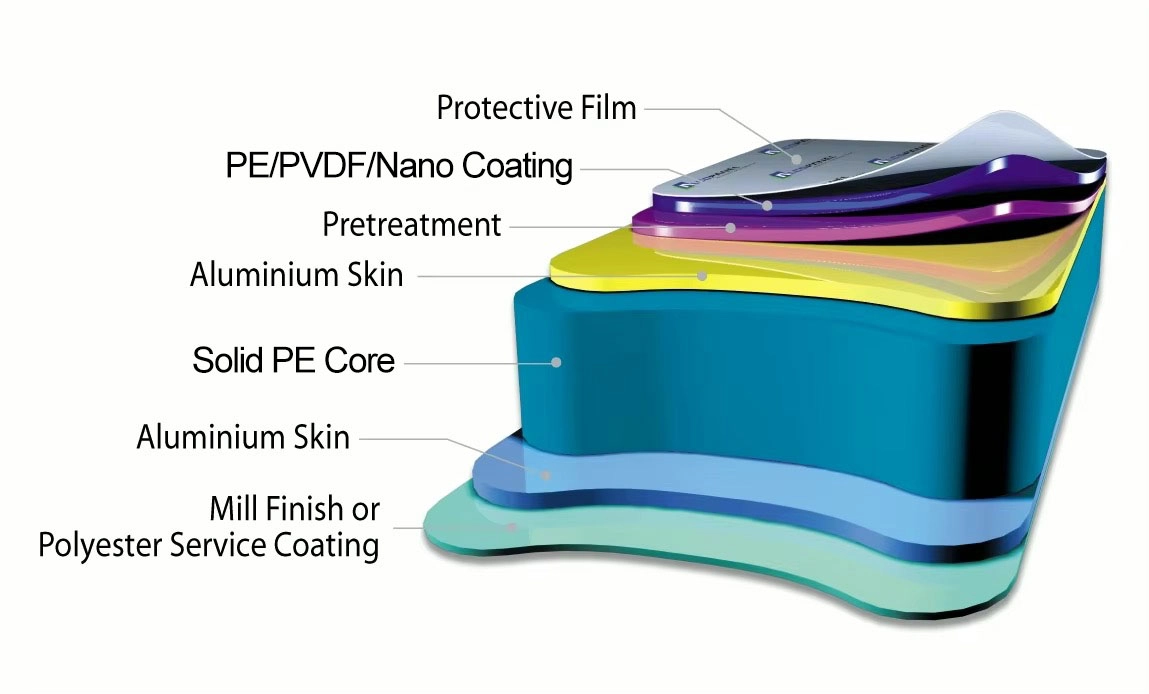
- Aluminum skin: Provide surface protection and aesthetics.
- Core material: Determines strength, fire rating, and thermal insulation.
- Surface coating: Offers decorative effect and corrosion resistance.
Quality issues can arise from raw materials, production processes, transportation, and installation. Understanding these potential problems helps buyers evaluate and inspect panels effectively.
Common Quality Issues and Causes of Aluminum Composite Panel
Coating Problems
Symptoms: Blistering, peeling, scratches, uneven color.
Causes: Poor coating quality, inadequate surface treatment, or improper baking/curing conditions.
Practical Avoidance Strategies:
- Request coating samples before purchase and perform weathering and scratch tests.
- Specify coating standards: PVDF/PE coating thickness ≥25μm, salt spray resistance ≥500 hours (ASTM/BIFMA reference).
- Inspect and photograph panels upon delivery to record color consistency, surface defects, or bubbles.
Delamination and Core Separation
Symptoms: Separation between aluminum sheets and core, blistering or peeling.
Causes: Improper adhesive, incorrect lamination temperature/pressure, or damp core material.
Practical Avoidance Strategies:
- Request third-party testing reports: lamination strength ≥5 N/mm², peel temperature ≥80°C.
- Perform sample testing with small batches for hot water immersion or peel tests.
- Ensure moisture protection during transport and storage with plastic film or other protective packaging.
Dimensional Accuracy and Flatness
Symptoms: Warping, uneven dimensions, surface irregularities.
Causes: Uneven aluminum thickness, inconsistent lamination/cooling, and long-distance transportation stress.
Practical Avoidance Strategies:
- Define tolerance standards: thickness ±0.2mm, length/width ±1mm, flatness ≤3mm/m.
- Request factory inspection or video documentation of flatness measurement.
- Transport panels using wooden crates, corner protectors, and bubble wrap to minimize deformation.
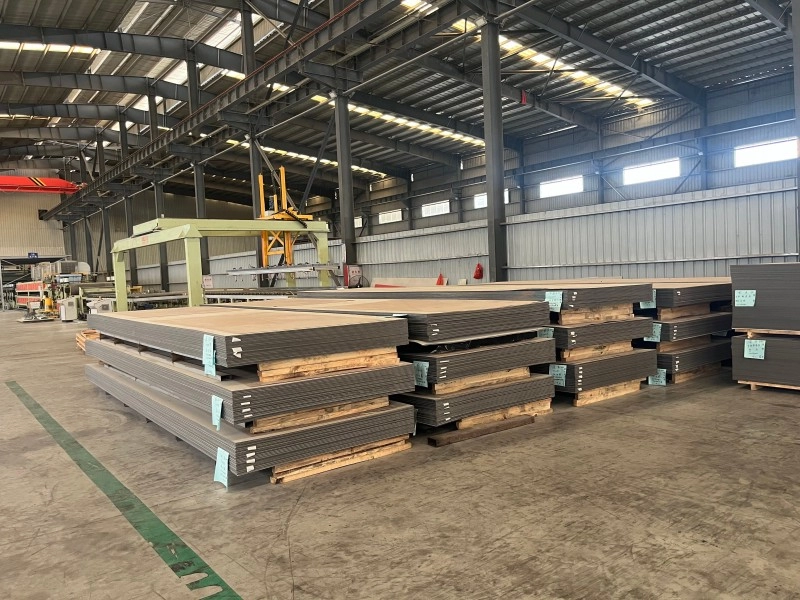
Shingkwang uses advanced automated production lines to ensure each panel is flat and dimensionally precise.
Fire and Environmental Compliance
Symptoms: Flammable core or excessive VOCs, non-compliant with safety/environmental standards.
Causes: Non-compliant core materials, lack of certifications.
Practical Avoidance Strategies:
- Request fire rating and environmental certifications: B1 or A-grade core, RoHS/REACH compliance.
- Verify the source and qualifications of core materials.
- Conduct on-site random checks for fire performance or VOC emissions.
Shingkwang can provide fire-rated cores customized to project requirements, ensuring safety.
Installation and Maintenance Issues
Symptoms: Surface scratches, edge damage.
Causes: Improper installation techniques, rough handling during transport.
Practical Avoidance Strategies:
- Prepare an installation manual with handling instructions, fixing methods, and edge protection guidelines.
- Train installation teams with supplier guidance to ensure proper handling.
- Inspect and photograph completed installation batches for quality documentation.
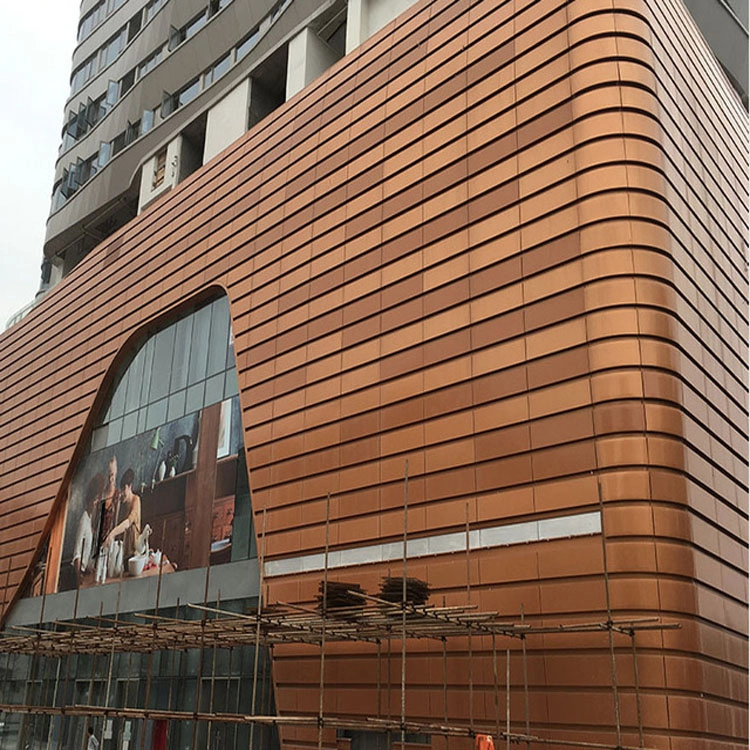
Comprehensive Strategies to Avoid Quality Issues in Aluminum Composite Panel
Choose reputable ACP panel manufacturers: experienced, technologically advanced, and certified companies;
Clearly define technical parameters and acceptance criteria: thickness, tolerances, coating grade, fire resistance rating, etc.
Sample testing and third-party certification: Request samples and third-party certification before purchasing.
Pay attention to transportation and installation: ensure protective packaging and proper handling.
After-sales service: choose suppliers that provide installation guidance, technical support, and warranty services.
About Shingkwang Aluminum Composite Panel Advantages
To help B2B buyers avoid quality risks, Shingkwang offers the following advantages:
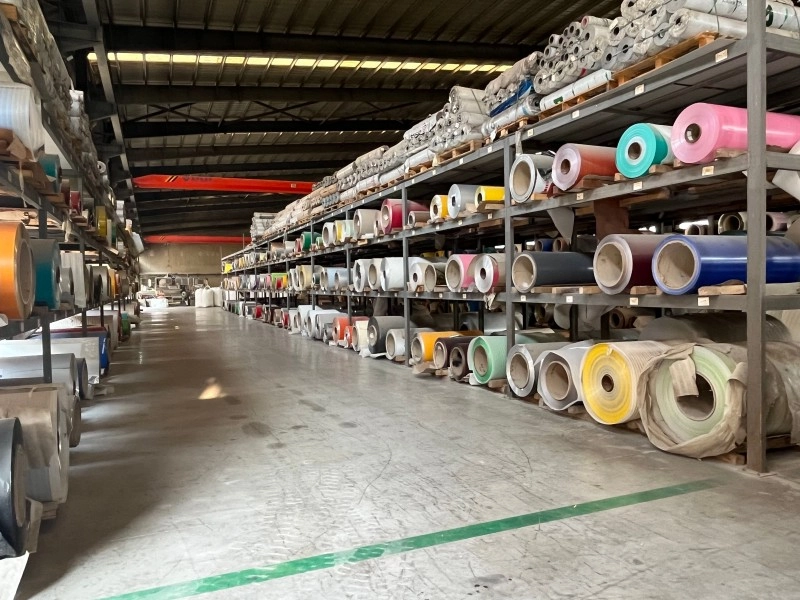
- Multiple coating options (PVDF / FEVE / PE) with high durability and uniform color.
- Fire-rated core options meeting international B1/A standards for safety and environmental compliance.
- Automated production lines ensure dimensional accuracy and flatness, reducing human error.
- Customizable sizes, colors, and thicknesses to meet diverse building project requirements.
- Professional technical support and after-sales service, including sample testing, installation guidance, and warranty coverage.
Learn more about Shingkwang aluminum composite panels, successful project cases, and technical specifications and processes.
Conclusion
For B2B procurement of aluminum composite panels, it is critical to focus on coatings, lamination, dimensional accuracy, fire and environmental compliance, and installation practices. By implementing actionable inspection, testing, and installation strategies, purchasers can effectively mitigate quality risks. Choosing an experienced, technically capable, and fully supported supplier, Shingkwang ensures safe, aesthetically pleasing, and long-lasting projects. Contact Shingkwang today to request samples and customized solutions for your aluminum composite panel projects!